
Be Still My Heart
SVT
“Had himself a heart attack or something.”
-Forrest Gump
denial (di-ˈnī(-ə)l) noun: refusal to admit the truth or reality of something.
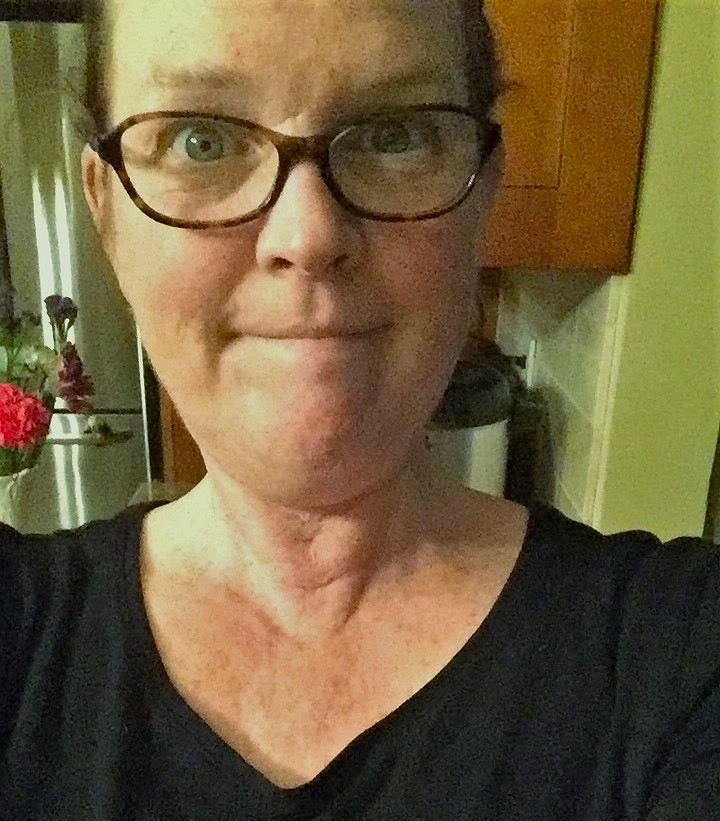
On January 16, 2018, I was lying on a gurney in the progressive care unit and there was only one detail I kept focusing on: my heart was at peace.
For 23 years I suffered from supra ventricular tachycardia (SVT). For those of you not familiar with SVT, it’s an electrical condition of the heart whereby the heart suddenly skips a beat and spasms uncontrollably in an attempt to catch a rhythm – I’m talking a heartbeat over 250 beats per minute. Michael had it too. He opted for cardiac ablation, which obliterated the problem. Having learned to control these attacks through diet (particularly cutting out all caffeine – yes, that included chocolate, much to my chagrin), I wasn’t quite ready for that kind of action, despite Michael’s encouragement and the warnings from my cardiologist and electrophysiologist.
At some point in my 20s, I had an EKG administered for no apparent reason and discovered an arrhythmia, a condition in which the heart beats with an irregular or abnormal rhythm in the heart. After being told it was a common occurrence and knowing that mostly every member of my family had some kind of irregular heartbeat, I wasn’t concerned at the time. Several follow-up EKGs over the next few years pretty much repeated what I already knew: the arrhythmia wasn’t going away. If not for those EKGs, I never would’ve known I had this issue because it wasn’t affecting my health in any way…until 1995.
After the diagnosis of pseudotumor cerebri and electing not to have a stent surgically planted in my spine, I was prescribed acetazolamide, the only medication that was going to alleviate my symptoms and get me back on the road to recovery; a medication that took advantage of the arrhythmia residing in my heart, setting forth the beginning of SVT over the next 23 years. Even though this medication was stopped when I got pregnant with the kid, SVT became a permanent fixture during the third trimester, landing me for the first time in the emergency room with an attack. Another new medication (amlodipine) helped to control the abnormal rhythm during pregnancy, but after giving birth my heart rate plummeted to 40 beats per minute and the medication was no longer an option.
Toward the end of 2014, my SVT was getting progressively worse. After several years of working in a thoroughly toxic environment and spending most of my free time caring for my elderly parents, my health was destroyed. Terrible eating habits, complete lack of exercise and too much wine every night had finally caught up with me. The first cause for alarm was when my heart went into full SVT while working with a developmentally disabled child in a local special needs preschool. For the most part “bearing down” (in an SVT attack it’s the same as giving birth or taking a constipated crap: you increase the pressure in your abdomen by contracting the muscles, hold your breath and push your body down) is one of two ways I could get my cardiac rhythm back to normal, the other being oxygen, which is obviously not something readily available. Thankfully, bearing down worked each time…until it didn’t.
In the beginning of 2017, I decided to do the American Cancer Society Bike-a-thon Bridge to the Beach, a fundraising bike tour from the Ben Franklin Bridge in Philadelphia to the boardwalk in Atlantic City (now Ventnor). Choosing to ride from the second starting point on the east side of Cherry Hill, I needed to train hard enough to make the entire 54 miles – a daunting task indeed. Five weeks before the event, I was desperate to get in some longer treks, but with every attempt, I returned exhausted from massive pain. I could barely make it 25 miles and my dread increased exponentially. Can I do this?! If this is what 25 miles feels like, what will 54 miles feel like in the end?! However, I wasn’t willing to give up so easily. There were two specific issues I needed to resolve in order to get further in my training: shoes and pants. Of course, my heart condition wasn’t even a consideration because, yes, I am an idiot.
My feet hurt. I had been on a mission to find the perfect shoes for cycling. In the beginning, I just wore whatever pair of sneakers I owned at the time. However, the laces were always too long and kept getting stuck in Ole Bessie’s chain. Double knotting and tucking the bows into my shoes, their tongues would inevitably shift to the side and their laces would sneak their way out, finding themselves twisted back inside the cogs of Bessie’s chain. Then I got into mountain biking and discovered the perfect pair of shoes. They fit exquisitely, didn’t have laces and were sturdy enough for cycling but flexible enough for walking when off the bike. I remember a friend’s excitement when he saw that I was taking this whole cycling thing so seriously (he secretly envied the hubby’s nod of approval giving me permission to purchase them, something his wife would never do). I wore them religiously for several years until the insoles completely fell apart and they started to hurt my feet, again.
I quickly followed those perfect shoes with a new pair that seemed perfect when I bought them. After several months of ignoring my feet sliding around inside these boat-sized (and very heavy) footwear, I returned to the store to find a new perfect pair of shoes. Once again, they seemed perfect when I tried them on and walked around the store a bit. And, at first, they seemed to work when riding – and then my feet started sliding off the pedals for no apparent reason (no, I don’t have clips and, no, I don’t want them, so don’t even try to convince me). But I cycled on, trying desperately to keep my feet still. Then came that day when I got a flat tire three miles from home. Although annoyed, I calmly set my bike down on the sidewalk (although Kathy had been trying to convince me of getting one, I didn’t have a kickstand at the time, although I finally listened six years later), took out my kit bag to locate a new inner tube…only to discover I had brought one of the kid’s tubes by mistake. “No problem,” I thought, “I always bring two spares.” Of course, this wouldn’t have been a problem if I hadn’t brought two of the wrong tubes…and my phone hadn’t died…and the hubby was out for the day.
As I slowly walked through the back streets of Maple Shade, New Jersey, my new pedal sliding shoes grew stiffer and stiffer with each step. Within a mile, the pain unbearable, I begged myself not to cry from the agony consuming my unnaturally high arches. I’m not sure how long it took me to walk home, but it felt like hours. Literally crawling up the driveway, I pushed Ole Bessie into the garage, sat down on a folding chair, ripped those new pedal sliding shoes off my swollen feet and hurled them across the room. That’s when I asked Kathy what she wore on rides. She showed me a beat up pair of old sneakers that probably cost her less than $20, but they fit her perfectly. No pain, no sliding, no stiffness, just pure comfort. I ran to one of the local department stores, found the perfect pair of lightweight jogging sneakers with laces that stayed put when tucked inside (because I learned how to tie them properly) and wore them on every bike ride until they too died after years of use. Except for that one last pair of bike shoes I bought on clearance that seemed perfect when I tried them on, I stuck to sneakers (and ultimately found a perfect pair of lightweight trail sneakers, albeit not cheap, just wide enough to fit comfortably – no pain, no sliding, no stiffness and short laces that never get caught in the cogs of Ole Bessie’s bike chain.
Now that I had my shoe issue resolved, I went to work on finding the perfect bike pants: brand new compression bike tights with a female anatomically specific chamois, something I never had before. For years I rode padless, struggling to reach the end without chafing and blisters (yes, that is one disgusting side effect) to the point of tears. Kathy insisted that not having padding was at the core of my struggle and she was right. After a test run, adjusting to the I’m-wearing-a-giant-diaper feeling and a little slippery sliding around in the saddle, I do believe I discovered my cure. That’s when I decided to put that wonderfully cushioned delight to a real test.
For two years I planned to ride Ole Bessie to the cemetery where both my parents and two brothers are buried. By car the ride takes about 40 minutes. According to my calculations, it would take about two and a half hours by bicycle. One way, it’s approximately 28 miles. I had done 28 miles before, painfully so, but I had done it. Round trip would give me 56 miles, a perfect distance in preparation for the Bridge to the Beach Bike-a-thon. So, on May 7, 2017, donning my new compression bike tights with the female anatomically specific chamois, I knew I could do it. And off I went.
Along with my new tights, I also bought a portable charger (no way was my phone going to die on any long trek again) and a little wireless portable speaker to play music off my music player (after being lectured by Kathy about the dangers of wearing headphones on the road). I was set: compression tights with the female anatomically specific chamois? Check! Smartphone? Check! Portable charger? Check! Wireless speaker? Check! Music player? Check! Extra water (no dehydration on this trip dude)? Check! Backpack filled with rain poncho, ID, debit card, snacks, extra gloves, house key, lip balm, hand sanitizer, wipes, eye drops, reading glasses, bike kit, two (correct) extra inner tubes, bike pump? Check! I was ready to rock and roll!
A mile up the road, upon entering Maple Shade, my new wireless speaker abruptly turned itself off. Having charged it to capacity literally within the hour before leaving home, I couldn’t figure it out. I turned it back on, music played, then nothing – I forgot to charge my music player.
Little voice: “It’s a sign, ya know.”
Me: “Shut up! I simply didn’t charge my music player. I’ll just stream music on my cell phone.”
Little voice: “But what happens when you bleed your phone battery dry? Hmmm?!”
Me: “That’s why I have the portable charger! Haha!”
Little voice: “But did you check to see if the power cord fits your phone?”
Me: “Shut up…”
Bringing up one of my music apps, I listened contentedly to my pre-chosen stations, anxiously praying my battery wasn’t slowly having the life sucked from it.
I first stopped in the quaint little town of Moorestown to take photos of the local Nipper Dogs, the last surviving fiberglass statues on display in front of local businesses on Main Street from a 2005 community art project in honor of Eldridge R. Johnson, a Moorestown resident and owner of RCA who bought the rights to the Nipper image, the company’s eventual mascot. Although early in my journey, I felt great. Thank you, new compression tights with the female anatomically specific chamois! I was ready to keep going. However, the Little Voice was starting to play a number on my brain, so I stopped at a local department store on the way to purchase a cord I could hook up to my portable charger. I did not want to waste too much power from my phone. My destination was in the boondocks – we’re talking major boonies with questionable WiFi. I needed my phone. Satisfied with the purchase, I charged my music player and continued on my way.
Little voice: “Why are you wasting that portable charger on your music player?! Whaddya gonna do when the charger dies and you can’t charge your phone?!”
Me: “Shit…”
And then my music player hurled itself off Ole Bessie’s handlebars and jumped ship for absolutely no reason, causing me to stop dead in my tracks in order to backtrack and retrieve it.
Little voice: “It’s a sign, ya know.”
Me: “Shut up!”
So, I unplugged the player and turned off the music. It was about time I just heard the sounds around me while riding. I actually liked it. The silence was welcoming, but not the weather. Thank you weather guy for getting it all wrong, again. Watching the weather pattern intently all weekend, I was given a 20% chance of rain. I get it; it doesn’t mean that there’s a 20% chance of rain. It means that 20% of my day, depending on my location, I will encounter rain (I think). Conscientiously watching the dark ominous clouds in my rearview mirror, I told myself to hustle. Within a few miles of the cemetery, looking to my left and seeing beautiful blue skies and looking to my right and seeing more beautiful blue skies, in true Joe Btfspik form, I had a feeling that the 20% chance of rain was literally hanging over my head.
By the time I reached the cemetery (in two and a half hours, mind you), the rain had ceased and I still felt great. Thanks again, new compression tights with the female anatomically specific chamois! Convinced I could make the entire ride back, I leaned my bike against a bench near Michael’s grave section but realized I couldn’t remember his plot number and began to text Regina for a map. Suddenly, and without warning, as if an angel of death was hovering over me, all the joy was sucked from my body and felt like I was going to pass out, my vision turning white. Out of nowhere, and for no apparent reason, an SVT attack hit me like a storm I had just evaded. So I sat on the bench and did what I’ve always done: beared down…and nothing.
Why it took an hour of my heart racing to the point of not feeling my own pulse, is not surprising. If you haven’t guessed by now, I’m completely ignorant when it comes to my health. I found my way to a gazebo with seating where I repeatedly attempted to regain control of my heartbeat, my vision again turning white with occasional points of almost passing out; that’s when I finally called the hubby and said I needed him ASAP. Knowing it would take him 40 minutes to reach me, I called back and told him I was calling 911. For the record, panic and anxiety are not good companions for SVT, making it nearly impossible to regain normal heart function. So, there I was alone in a cemetery on a Sunday afternoon in the middle of nowhere. The offices were closed and there was no military or security anywhere in sight. I begged myself not to pass out. Can you guess what I was thinking? You got it: “Dammit! I know I could’ve made it back home!” “Dammit! I didn’t even get to visit with mom, dad and Baby Arthur!” Up to that first flutter, I felt great (thanks to my new compression tights with the female anatomically specific chamois). I was mad at myself for ignoring the problem for so long. I was mad at my heart for being a dud. I was mad at my endocrinologist for prescribing a drug that caused heart palpitations, despite her knowing full well about my SVT. I was mad at her for not taking me off it completely when I asked during our last visit (damn straight I called her first thing in the morning).
As I sat in the gazebo, knowing the police and EMTs were on their way, I gave it one last try. Bearing down like I was giving birth to a 30-pound baby, my heart suddenly stopped and my pulse returned to normal…just as the first police officer approached me…then the second…then the local fire squad…then the ambulance…followed by the paramedics…and then the hubby.
Me: “Hey guys! Umm…false alarm?”
Little voice: “You’re an idiot.”
We were later charged for all these first responders responding because of my refusal to go to the hospital…yeah, I am an idiot.
Why is that?! Why am I such an idiot? Why do I ignore my body telling me to stop? Why do I put myself in these dangerous situations? Why do I defy death with such arrogance? The fear of passing out alone frightened me. What if I was having a heart attack and died there? I wouldn’t be found until the morning at the earliest. What was I thinking?!
I’ll tell you why: because I didn’t pass out and I didn’t have a heart attack and I didn’t die at that moment, again. My knights in white stallion cars and red chariots arrived in the nick of time, again. I got away with it, again. And, of course, as we drove out of the cemetery, there was my beautiful blue sky. I may not have found Michael, but he found me. However, that sky made me even madder.
With the cemetery incident behind me, at dinner that night we talked to the kid about her friends and what she thought their futures held, ranging from total loser to crowning achievement. She talked about a friend whose attitude toward school had changed significantly over the past few weeks. He didn’t seem to care about the consequences of his actions: being late, skipping class, dressing inappropriately. I reminded her of another friend who had been told repeatedly over the previous two or three years that he would be thrown out of school because of the same kind of behavior. Every time the administration spoke to him, he upped the ante. Despite breaking every rule possible in an attempt to sabotage his education and get thrown out of the school, nothing happened. He still managed to graduate, at the bottom of his class, that is. He got away with it, so why should the other friend give a shit about doing the right thing? He, too, was going to get away with it until something different happened. I then asked myself: “At what point will I concede before not getting away with it?” I needed to do some serious soul searching…but it didn’t last long.
Six weeks later, I would push my body to its limit. I managed to make it through the Bridge-to-the-Beach Bike-a-thon without any SVT attacks and agreed to take a week off in order to recover from all that hard work. It was the most miles I had ever ridden and the second hottest ride I’ve ever encountered on my bike (the first was in Goshen, New York in 2010 – more to follow), so I wasn’t sure how my body would respond in the aftermath. Not convinced quite yet, however, two days into that “recovery week,” the kid and I went to the gym, where I thoroughly exhausted myself, again. Thankfully, I listened to the Little Voice and stayed home the rest of the week.
But, by the end of that week, having consumed way more calories than expended over the weekend, I headed to the gym with the kid. Feeling a little tired, I forced myself to push through the fatigue and kept insisting I could go further and push harder – until SVT, once again, told me it was time to stop. Climbing down from the ARC trainer and finding a bench to sit on where I could bear down and gain some control without too many witnesses, it didn’t resolve after a few minutes. I remembered reading an article about SVT that suggested plunging your face into ice water (actually confirmed by a cardiologist friend) and considered asking the employees for their assistance, but how does one explain to an 18-year-old thumbhead what SVT is as you’re having an attack, let alone figure out where they can get ice and the water in the fountain isn’t even cold.
So I walked to my car and blasted the air conditioning while bearing down in an attempt to stop the frantic beating. At this point, my body was bouncing off the back of the seat. From experience, I knew my heart rate was well over 250 beats per minute. I quickly texted the kid, who came to the car and asked me what to do. As luck would have it, there’s an urgent care next door to the gym (what are the chances of that?!). Because Dohertys don’t do sick, I insisted on driving to the end of the parking lot, despite the kid’s argument that she should be the one driving (yes, I’m also an idiot with major control issues). I parked the car, walked across the back lawn with the kid in tow, entered the building, cut in front of several people, straight to the reception desk, told the nurse I was having an SVT attack and demanded oxygen. I suddenly remembered the first time I had an attack that was this uncontrollable and caused me to go to the emergency room: when I was seven months pregnant with the kid. At that time, the nurses thought I was having a panic attack and gave me oxygen, which immediately brought me out of the attack.
First came the medical assistant who took my vitals (off the charts, naturally). Then came the nurse who suggested I bear down (yeah, been there, done that). Then came the doctor who told me he was calling 911 because my heart rate was so high he couldn’t, by law, treat me at their facility. I again insisted that oxygen would help, to which they finally surrendered. Within seconds my heart found its rhythm and within minutes the EMTs were in the room taking my vitals again and tried to convince me to go to the local emergency room. Of course, all I wanted to do was get in the car and drive myself home (right, because Dohertys don’t do sick and I’m an idiot), so I tried to convince them that the kid could just drive me home. They, on the other hand, conceived of any and every medical crisis that could occur in the car on the way home. Despite my not feeling the love at the time, in hindsight, thankfully the kid bought each and every scenario, hook, line and sinker and refused to take me in the car. So I got to experience my very first ambulance ride – and wept over my “weakness.”
As all this was happening, I kept telling the kid, “Don’t call daddy!” It was Father’s Day. All the hubby wanted was a peaceful day (i.e. no arguments), a nap and some barbecued burgers. But as I was being admitted to the ER, I finally called him. I was crushed that the father of our child would be spending his day at the hospital, a place we had both grown to loathe. Without hesitation, however, the hubby was by my side, relieving the kid of her duties.
I hated being there. For me, a hospital is where you go to die slowly, surrounded by people who don’t love you or don’t care about the end result. I know many doctors and nurses, so I know that’s not necessarily reality, but that’s how it feels when you’re there. I just wanted to leave before the toe tags were handed out.
In the end, I didn’t have a myocardial infarction and no apparent damage to my heart, all bodily functions appearing to be back to normal, dehydration deemed the cause for setting the SVT in motion and confirmed by my cardiologist later that week. Although the hubby didn’t get his nap, at least there were no arguments and he ultimately got his burgers. And, as expected, I put that day behind me and convinced myself that I was perfectly healthy, defying the reality of my situation, again.
Three days later, fighting back the Little Voice, I reluctantly got back in the saddle, but not without reminding myself to move slow and steady, drink lots of water and stop when any signs of SVT suddenly appeared. Heading to my go-to place, I was comfortable with its familiarity and knew there would be a number of people who could help if something went wrong. Not in training and having nowhere else to be, I stopped whenever I saw something interesting, compelling myself to just enjoy the moment. And nothing happened, again; that was the problem.
Five months later, I would finally come to my senses.
Approaching an Israeli airline ticket counter, I pointed out the representative who had magically upgraded me and the hubby to economy plus the summer before for a nominal fee. Upon questioning the ticket representative about getting seats together, I mentioned the Magical Upgrader Lady and came to find she had been promoted to supervisor. Bingo! We quickly found ourselves standing in front of the Magical Upgrader Lady attempting to remind her of our flight the year before when she managed to finagle economy plus seats for us as we begged to be together with the possibility of another miracle economy plus opening up. No such luck this time, but the Magical Upgrader Lady was able to move people around to give us seats together…in the very last row of the plane…in front of the toilets…across from the griping passengers who had been bumped for our sake. We were certain to keep our mouths shut tight.
Somewhat thankful that we were at least sitting together, as the hubby was swiftly recruited to daven Mincha (afternoon prayers) I chanted my close proximity mantra over the next couple of hours before boarding: “Please do not put me next to someone wearing heavy cologne/perfume and/or who has bad body odor.“
Der mentsh trakht un got lakht.
My other pet peeve I forgot to pray for? Loud…noisy…chewing. Although a very sweet man, my aisle seat companion had no front teeth and slurped his food very loudly…and slowly…for a very long time. God help me. And, of course, before even taking off, my heart decided it was time to have an hour-long attack of SVT thanks to the diesel-fueled coffee I stupidly consumed on the way to the airport. Due to the flight attendant’s poor English and my lack of proficient Hebrew, I was failing to explain how I needed to lie down on the floor of the galley in order to bear down properly. For lack of understanding, the attendant had me sit in one of the galley seats while phone calls were frantically made and questions asked in an attempt to translate what was wrong with me. Finding myself suddenly alone, I quickly took advantage of the opportunity to bear down long enough to catch a normal heart rhythm when the flight attendant returned with the pilot to ask more questions.
Me: “Hey guys! Umm…false alarm…again?”
Little voice: “You’re still an idiot.”
The hubby: “When we get home, you’re calling the cardiologist and getting that ablation. I won’t take no for an answer.”
So, I finally bit the bullet and followed up on my promise to call the electrophysiologist and scheduled the cardiac ablation as soon as we returned to the states.
A year prior, an endocrinologist had prescribed levothyroxine due to a long-term battle with borderline hypothyroidism. Unbeknownst to me at that time, its number one side effect is heart palpitations. Five months later, after arguing with this doctor ad nauseam about daily episodes of SVT, I took myself off levothyroxine and finally called my cardiologist, who I came to find was no longer practicing. Now I needed to find a new endocrinologist and a new cardiologist.
At this point, you’re probably asking, “What the hell were you waiting for woman?!” Trust me, I repeatedly asked myself the same question for 23 years, but my reasons were quite simple:
(1) I don’t do sick; that’s just me and my genetics, plain and simple.
(2) Several years prior, I had an electrophysiologist who performed a treadmill stress test and concluded that I needed a pacemaker. I wasn’t even 40-years-old and had a young child at home. Needless to say, I ran from his office never to be seen there again.
(3) In the early 2000s, I was forced to find a new cardiologist who could perform a nuclear stress test prior to having laser surgery to eradicate some precancerous growths. Making the mistake of mentioning a history of heart issues, my oncologist insisted on the test before undergoing the laser to make sure I could handle the anesthesia. Luckily, my heart cooperated that day, and I passed the test with flying colors; hence my belief that I had SVT under control and an ablation was no longer necessary.
(4) Years later, I had to have the same laser surgery again, but this time the oncologist only wanted a treadmill stress test. Although the cardiologist was able to induce some palpitations and recommended cardiac ablation, he deemed my heart healthy enough to undergo anesthesia without any unforeseen repercussions. Of course I followed through with the laser surgery, but didn’t return to discuss the ablation.
(5) People die in hospitals, which I’ve witnessed firsthand. After 36 hours of labor and three hours of pushing the kid out of my body at 11:30 AM, I was ready to leave by dinner time. Following my hysterectomy, I could’ve easily jumped from my hospital bed dragging my morphine drip and urinary catheter behind me. Don’t get me wrong, most days I’m a really good patient – until you put me in the hospital.
(6) Anxiety. I’m that one percent who suffers the “worst case scenario.” It’s my track record and just my plain dumb luck.
So after 23 years of denial reinforced by doctors, EKGs, stress tests, echocardiograms and ultrasounds, I convinced myself that I could live with it. The good news was that I had found a new cardiologist and a new endocrinologist, both of whom I liked and trusted, mostly because they agreed that the levothyroxine had been the culprit in bringing my SVT out of hiding with a vengeance. However, the cardiologist also strongly recommended cardiac ablation, again. I agreed to follow up with the electrophysiologist within the same practice and go through with the cardiac ablation by the end of the year, until the kid called from Israel to tell us she was making aliyah (becoming an Israeli citizen; literally “rising up” in Hebrew) and we impulsively flew to Israel…and I had that hour-long bout of SVT before takeoff….and then I came down with a respiratory infection that lasted over a month…and then more excuses I couldn’t really justify.
Barely capable of sleeping the night before and fasting since midnight, the hubby drove me to the hospital before the crack of dawn. Arriving 15 minutes early, the hubby made a B-line for the toilet and I signed in as a receptionist slapped onto my wrist a red plastic bracelet with bold capital letters reading “ALLERGIES.” The first hurdle of anxiety had been jumped: someone had actually read my chart and knew of my numerous and potentially lethal allergies. Before I could sit down and make myself comfortable, I was whisked off to an office where a woman slapped another plastic bracelet onto my wrist, this one white and containing personal information I needed to confirm. With the second hurdle of anxiety jumped, I was happy to know that no one was going to confuse me with the patient who was getting silicone testicular implants.
Fifteen minutes later I was called back to prep for the procedure. Walking by the nurses’ station, my escort was asked by her supervisor what my name was, to which I announced in a sing-song voice with jazz hands, “Alice!” My escort followed suit and all the staff giggled. The one thing I’ve learned is that humor can be a great remedy for calming one’s nerves. Anxiety hurdle number three had been jumped when I realized the staff was genuinely nice and easily entertained.
Changing into a hospital gown and hopping onto a gurney, I was greeted by another nurse with a fabulous sense of humor and an ability to avoid bodily pain through distraction: “Wiggle your toes while I shove this IV needle into your vein.” It actually helped, and the fourth anxiety hurdle had been jumped. Another nurse administered one last EKG confirming the long ago diagnosed arrhythmia I lived with for over 23 years. Thankfully, the hubby was allowed to wait with me, my fifth anxiety hurdle having been jumped with the assistance of my bestie. I wasn’t alone.
As we waited, it suddenly dawned on me that I had only met the electrophysiologist once six months prior. What the hell did he look like?! What if some dude came over and claimed he was my physician?! What if I did end up with silicone testicular implants?! Thankfully, all the staff confirmed his identity as he approached my little corner of pre-op. With doctor recognition, anxiety hurdle number six had been jumped.
The doctor proceeded to walk us through the procedure: how they would sedate me, insert catheters into veins in both sides of my groin and thread these tubes to my heart in order to deliver energy in the form of heat to modify the tissue in my heart that was causing the arrhythmia. After years as a psychiatric social worker with a few years of medical transcription in between, his words didn’t phase me in the least. When he started to explain the possible “downsides” of the procedure is when my brain got stuck.
(1) Bleeding or infection at the site where the catheter was inserted. Okay, I could deal with this one. Unfortunately, it wouldn’t be the first time.
(2) Damage to your blood vessels where the catheter may have scraped as it traveled to my heart. Okay, just try to visualize this one; that’s when the brain stops thinking.
(3) Damage to my heart’s electrical system that could require a pacemaker. See! That last electrophysicist was right all along!
(4) Possible stroke – I had nightmares of this in the days leading up to the procedure.
There was no turning back and then the doctor literally evaporated (okay, so maybe not literally). I then made it known loud and clear that I was anxious (by the end of the night, I was known as that “one who said she had anxiety”). That’s when one of the OR nurses introduced herself (and when I started paying attention to names for some unknown reason, perhaps a means of diverting the Little Voice’s attention). Her name was Holly, and she explained what her role was as well as all the other staff (except for one man who she kinda blew off) that would be in the operating room with me. Obviously recognizing my anxiety (perhaps because of my repeated exclamations of feeling anxious), Holly managed to calm me down after answering the routine virally paranoid questions about traveling abroad, to which I answered, “Yes, Israel,” and to which she told me about her pending visit with a church group later in the year. Anxiety hurdle number seven had been jumped as we talked about Israel and all the wonderful places she would travel to while there.
After meeting one of the anesthesiologists, Tom, who in the end had nothing to do with my surgery, Holly and I chatted about Israel as she wheeled me through a labyrinth of hallways to the OR. The last stop before D-Day, I waited and watched in the hallway as the staff prepped the operating room. Holding back sobs of fear, I clearly announced, once again, that I was anxious and guaranteed my heart would go into SVT upon request. Holly, ever my savior, came back to reassure me that all was good with the world and continued to talk about Israel. And then I met David, the lead anesthesiologist who reminded me of my meeting Tom earlier in the day and mentioned that Leah would be my anesthesiologist for the procedure (who, I would later find out, had a lunch break during my ablation?!) Wait! How many anesthesiologists do I need for this “quick” procedure?! Carefully sliding me from the gurney to the operating table, I made a note of all the names of the people present in the room – Holly, Kathy, Karen, Benjamin, Leah – and I reminded them about how anxious I was, trying to commit their names to memory. As my vision slowly blurred and my speech slurred, I told Leah how sneaky she was for slipping me a mickey when I wasn’t looking. No doubt my anxious talking needed to be put to sleep…literally. But it didn’t last long.
One of the things about my brain is that I dream very vividly. If I put my mind to it and put them on paper, my dreams would make fantastic screenplays. I sometimes have to consider whether or not my dreams are real or imagined. So when I found myself having conversations throughout my surgery, I thought nothing of it. I was simply “dreaming” about my experience. Only later did I come to find that I was actually conversing with the medical staff in the OR during the procedure.
Oh, the two things I failed to mention earlier:
(1) Warning the electrophysiologist that I was a sleep talker.
Electrophysiologist: “Can we record?!”
(2) Asking Tom, the anesthesiologist, what would happen if I woke up during the procedure.
Tom: “No problem! The drugs are so good you won’t even know what’s happening.”
I remember talking about Israel with Holly and having a conversation with Leah about being a redhead. I dreamed about my mother and her family. Did I discuss this out loud?! (Sidebar: My mother’s father is buried across the street from the hospital.) Next thing I knew, Leah was talking to me about the procedure and I was wide awake, which apparently freaked out the entire medical staff because I had been loaded up with twice the required sedation for someone my size, the words “elephant tranquilizer” being whispered throughout the OR.
Although the procedure itself only took one hour (thanks to my cooperative heart going straight into SVT), apparently, it took almost an hour to get me sedated because I kept waking up throughout the procedure. Leah explained how I went under almost immediately then opened my eyes and started talking again, repeatedly, something the hubby and the kid have experienced numerous times over the years. Yeah, it’s freaky for those witnessing, but I have no recollection whatsoever of these events. Leah explained that some people can metabolize chemical enzymes quicker than others, particularly redheads, which is why I was questioned about my natural hair color. Who knew?! Either way, Tom was right: I didn’t feel a thing and honestly didn’t give a shit.
Doing better than anyone had expected, I actually skipped two levels of recovery because I was so alert. Four hours after surgery, the hubby was driving us home. Two days post-surgery, I felt awesome, although the “elephant tranquilizers” were drastically wearing off and occasional chest pains reminded me of my ordeal – but it really only hurt when I burped.
I can’t get over how calm and quiet my heart felt. For the first time in 23 years my heart wasn’t struggling and I barely noticed its existence. I couldn’t wait to get back on Ole Bessie to take a ride without incident…and then it rained for two months.
 My Gump Ride
Leave a comment